Stainless steel crown (baby tooth)
A typical case, in 6 steps over 1 visit. Typically the crown feels tight for a couple of days, and a bite that feels high usually settles within a few weeks. Every step names its source.
Not yet reviewed by a licensed clinician. Every step names its source.
Stainless steel crown (baby tooth) · Visit 1
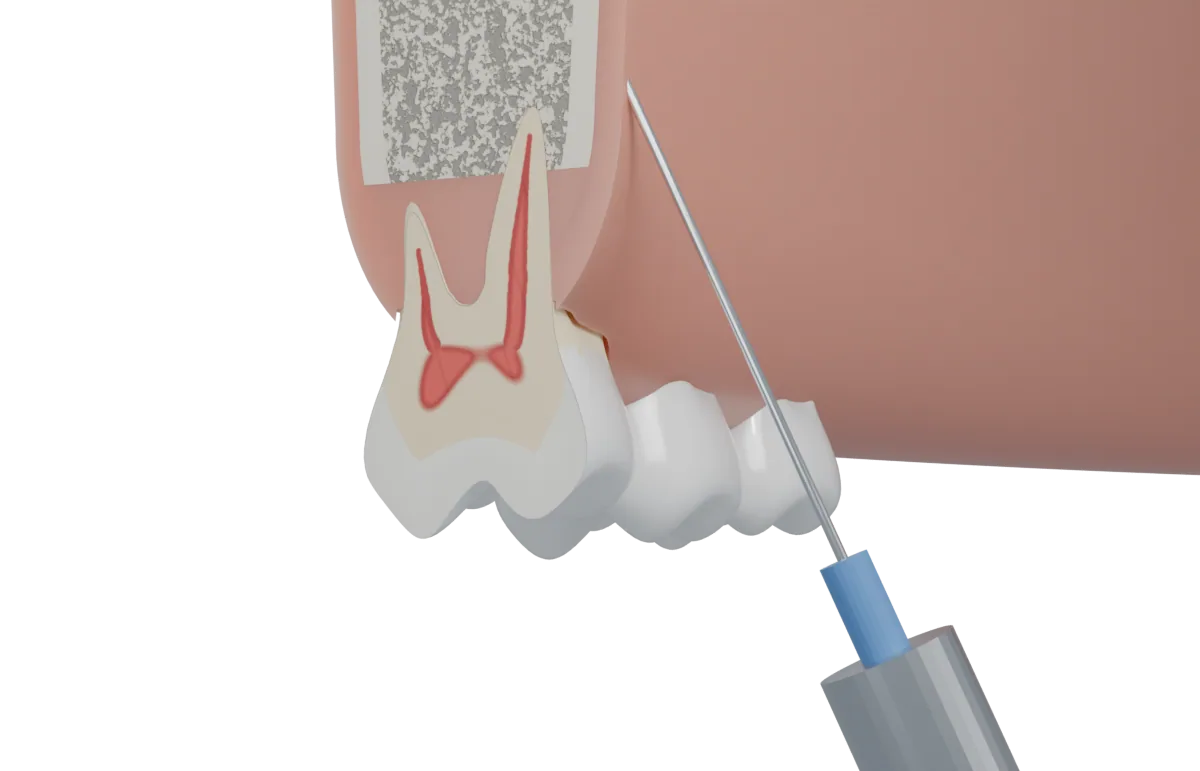
Numbing
The area is numbed with a local anesthetic so the child cannot feel pain, though the injection itself may cause some discomfort. If needed, the treatment can be done under general anesthesia.
Source: guysandstthomas.nhs.uk
Steps in a typical case
Numbing
The area is numbed with a local anesthetic so the child cannot feel pain, though the injection itself may cause some discomfort. If needed, the treatment can be done under general anesthesia.
Visit 1 · Source 1
Rubber raincoat
A thin rubber sheet, often called a rubber raincoat, is placed over the tooth for safety.
Visit 1 · Source 2
Shaping the tooth
The dentist removes the soft, decayed parts of the tooth and shapes it so a crown can be placed.
Visit 1 · Source 2
Trying on crowns
Stainless steel crowns are pre-made in different sizes. The dentist tries on crowns to find the best size and adjusts it for a snug fit and a correct bite.
Visit 1 · Source 2
Cementing the crown
Once the fit is right, the crown is cemented in place. The dentist then cleans the tooth and does a final check.
Visit 1 · Source 2
Afterward
The mouth stays numb for a while, so a parent watches that the child does not bite the lip, cheek or tongue. A soft diet for the first 12 to 24 hours helps with soreness, and the crown can feel tight for a couple of days.
Visit 1 · Source 2
Typical trade-offs
| Visits | Typically 1 visit to prepare the tooth and fit the crown, with any follow-up set by the dentist. Source 2 |
|---|---|
| Time to final result | Typically the crown feels tight for a couple of days, and a bite that feels high usually settles within a few weeks. Source 1 |
| How long it lasts | Typically the crown stays in place until the baby tooth falls out naturally. Source 1 |
| Upkeep | Typical upkeep: brushing the crown twice a day, cleaning between the teeth as usual and regular dental checkups. Source 1 |
Figures for a typical case from the sources below. A dentist can say how a given case differs.
Questions to ask your dentist
- The typical case takes one visit. Would mine, and how long would it take?
- What are my other options, including waiting, and what happens if I wait?
- How long does it usually last in a case like mine, and what upkeep will it need?
- Will it hurt, and what can I eat or do while it heals?
- What will it cost me, and will my insurance cover it? Ask which billing codes apply (the typical case uses D2930, D2931).
- How many of these have you done, and who would do mine?
Sources
- Stainless steel crowns for children. Guy's and St Thomas' NHS Foundation Trust. guysandstthomas.nhs.uk/health-information/stainless-steel-crowns-children. Accessed November 14, 2026.
- Stainless steel crown. University of Toronto Faculty of Dentistry. patients.dentistry.utoronto.ca/node/438. Accessed November 14, 2026.
Osler Press procedure library, version 2026.11.0. Billing codes for the typical case: D2930, D2931.