Space maintainer (for a baby tooth lost early)
A typical case, in 7 steps over 3 visits. Typically stays in until the permanent tooth has come in to the right position, with checks from time to time. Every step names its source.
Not yet reviewed by a licensed clinician. Every step names its source.
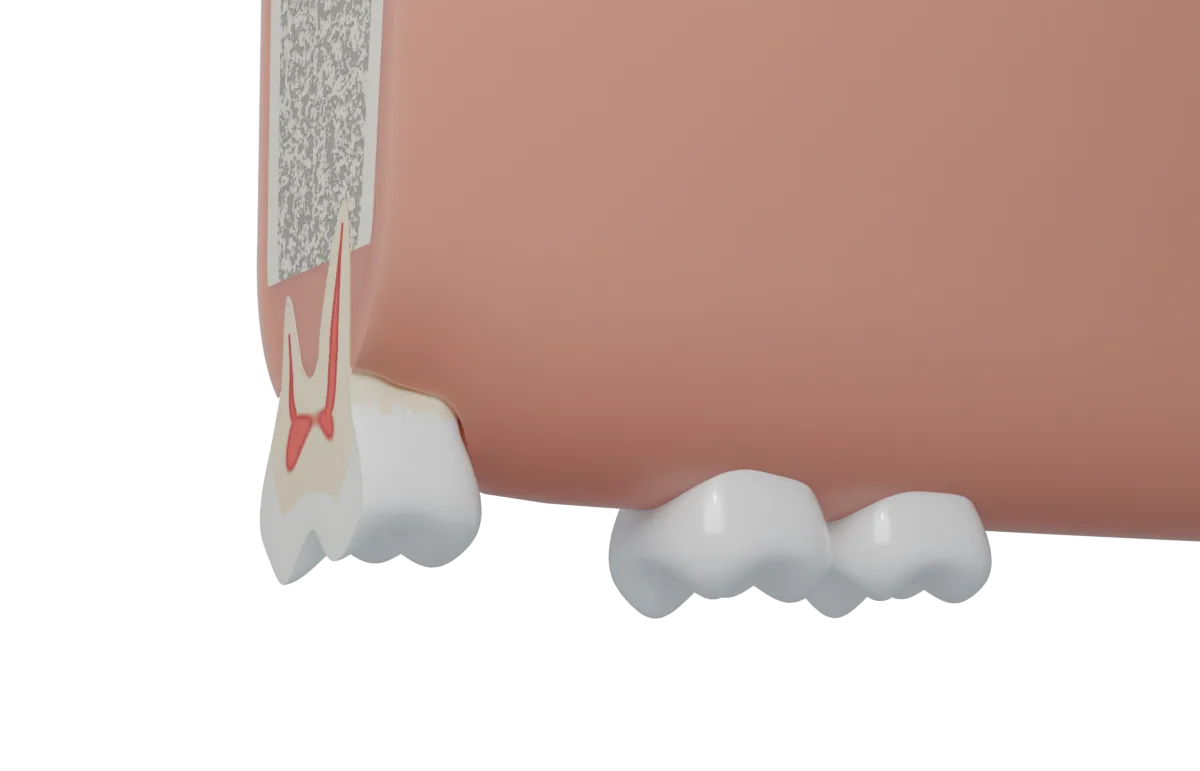
Space maintainer (for a baby tooth lost early) · Visit 1
Finding out if one is needed
A space maintainer may be suggested when a baby tooth is lost early, before the permanent tooth is ready to come in. Without one, adult teeth can come in where they should not, leaving too little room for other teeth.
Source: mouthhealthy.org
Steps in a typical case
Finding out if one is needed
A space maintainer may be suggested when a baby tooth is lost early, before the permanent tooth is ready to come in. Without one, adult teeth can come in where they should not, leaving too little room for other teeth.
Visit 1 · Source 1
Checking the mouth
The dentist looks at which tooth was lost, how long ago, how much space is left, the child's dental age and whether the permanent tooth is coming in.
Visit 1 · Source 2
Choosing the type
Fixed types sit on one side (such as band and loop or crown and loop) or across both sides of the mouth. Removable types, such as a partial denture, are also used.
Visit 1 · Source 2
Making it
Some are custom made by a dental lab. Kits and directly bonded types need no lab and can be placed in a single visit.
Visit 1 · Source 2
Fitting it
The appliance is put in place, by cementing it if it is a fixed type. The dentist checks the band and cement for a good seal so it stays on. A lab-made one is usually fitted at a second visit.
Visit 2 · Source 2
Regular checks
The dentist checks that the appliance is intact and in place, and watches the permanent tooth come in. It may need repair, re-cementing or replacing.
Visit 3 · Source 2
Until the tooth comes in
The appliance should stay until the permanent tooth has come in to the right position. A change or a new appliance may be needed as the child keeps growing.
Visit 3 · Source 2
Typical trade-offs
| Visits | Typically 1 visit for a kit or bonded type, or 2 visits when a dental lab makes it. Source 2 |
|---|---|
| Time to final result | Typically stays in until the permanent tooth has come in to the right position, with checks from time to time. Source 2 |
| How long it lasts | Typically lasts under two years on average, and loose or lost cement is the most common reason one fails. Source 2 |
| Upkeep | Typical upkeep: periodic checkups to inspect the appliance and the coming tooth, with repair, re-cementing or replacement if needed. Source 2 |
Figures for a typical case from the sources below. A dentist can say how a given case differs.
Questions to ask your dentist
- The typical case takes 3 visits. How many would I need, and what happens at each one?
- What are my other options, including waiting, and what happens if I wait?
- How long does it usually last in a case like mine, and what upkeep will it need?
- Will it hurt, and what can I eat or do while it heals?
- What will it cost me, and will my insurance cover it? Ask which billing codes apply (the typical case uses D1510, D1516, D1517).
- How many of these have you done, and who would do mine?
Sources
- Space maintainers. ADA MouthHealthy. www.mouthhealthy.org/all-topics-a-z/space-maintainers. Accessed November 14, 2026.
- Management of the developing dentition and occlusion in pediatric dentistry. American Academy of Pediatric Dentistry. www.aapd.org/globalassets/media/policies_guidelines/bp_developingdentition.pdf. Accessed November 14, 2026.
Osler Press procedure library, version 2026.11.0. Billing codes for the typical case: D1510, D1516, D1517.