Single implant (no bone graft)
A typical case, in 7 steps over 2 visits. Typically 3 to 9 months of healing before the final crown. Every step names its source.
Not yet reviewed by a licensed clinician. Every step names its source.
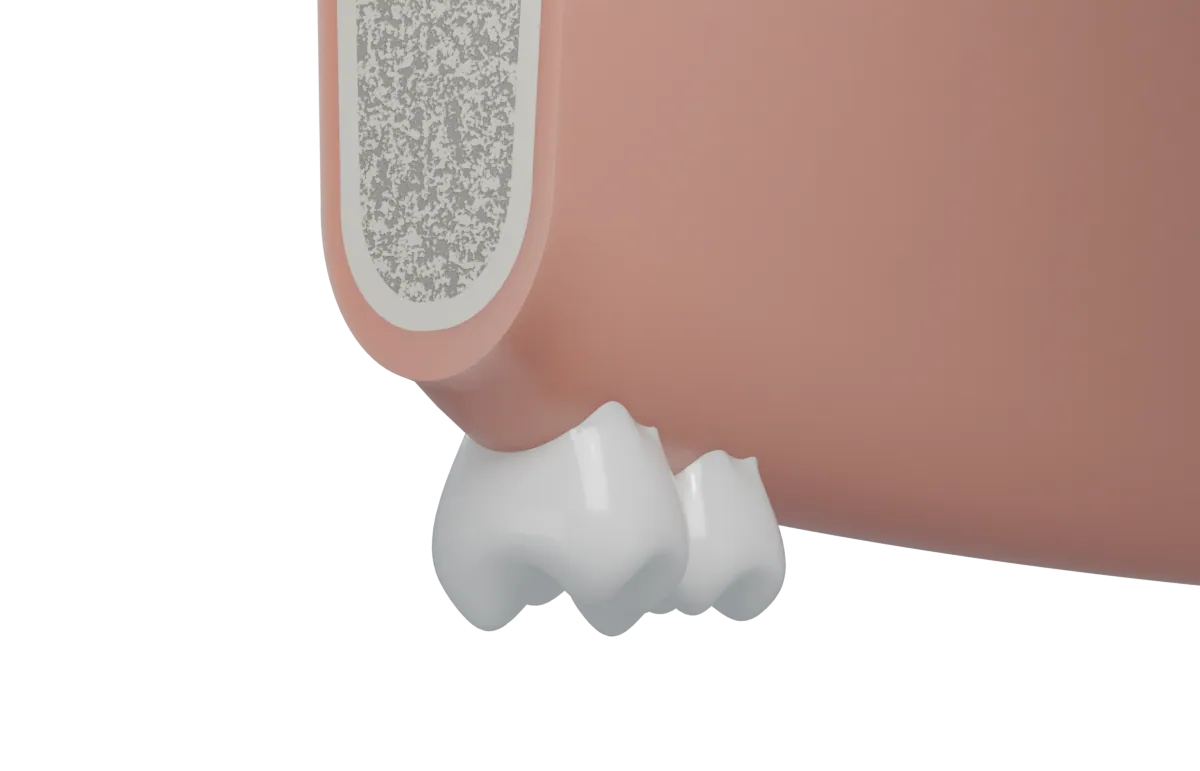
Single implant (no bone graft) · Visit 1
Numbing
Anesthesia numbs the gums so the surgery should not hurt. Sedation is also an option for some people.
Source: clevelandclinic.org
Steps in a typical case
Numbing
Anesthesia numbs the gums so the surgery should not hurt. Sedation is also an option for some people.
Visit 1 · Source 1
Opening the gum
A small cut is made in the gum. This shows the bone underneath where the implant will go.
Visit 1 · Source 1
Preparing the jaw
Special tools make a small hole in the jawbone. The hole is widened until it is the right size for the implant.
Visit 1 · Source 1
Implant placed
The implant post is placed in the jaw. The gum is moved back into place and closed with stitches. For a front tooth, a temporary tooth is made to wear during healing so there is no gap.
Visit 1 · Source 1
Healing, 3 to 9 months
Slight soreness and swelling are normal after surgery and usually ease within a week or so. Over three to nine months, the jawbone fuses to the implant.
Visit 1 · Source 1
Abutment and crown attached
Once the implant heals, a small connector post called an abutment is attached, then the final crown. This usually takes about one hour and may need a second minor surgery.
Visit 2 · Source 1
Same-day option
Some people wait until the implant has fully fused, up to several months, before the new tooth goes on. Others have the implant and the new tooth placed in one visit.
Visit 2 · Source 2
Typical trade-offs
| Visits | Typically a few procedures: implant surgery, then the abutment and crown. Source 1 |
|---|---|
| Time to final result | Typically 3 to 9 months of healing before the final crown. Source 1 |
| How long it lasts | Typically an implant can last a lifetime with proper care; most crowns on implants last around 15 years. Source 1 |
| Upkeep | Typical upkeep: brushing, flossing and regular dental visits. Source 1 |
Figures for a typical case from the sources below. A dentist can say how a given case differs.
Questions to ask your dentist
- The typical case takes 2 visits. How many would I need, and what happens at each one?
- What are my other options, including waiting, and what happens if I wait?
- How long does it usually last in a case like mine, and what upkeep will it need?
- Will it hurt, and what can I eat or do while it heals?
- What will it cost me, and will my insurance cover it? Ask which billing codes apply (the typical case uses D6010, D6057, D6058).
- How many of these have you done, and who would do mine?
Sources
- Dental implants. Cleveland Clinic. my.clevelandclinic.org/health/treatments/10903-dental-implants. Accessed November 14, 2026.
- Implants. ADA MouthHealthy. www.mouthhealthy.org/all-topics-a-z/implants. Accessed November 10, 2026.
Osler Press procedure library, version 2026.11.1. Billing codes for the typical case: D6010, D6057, D6058.