Dental sealants
A typical case, in 6 steps over 1 visit. Typically no downtime. Work or school can continue right away. Every step names its source.
Not yet reviewed by a licensed clinician. Every step names its source.
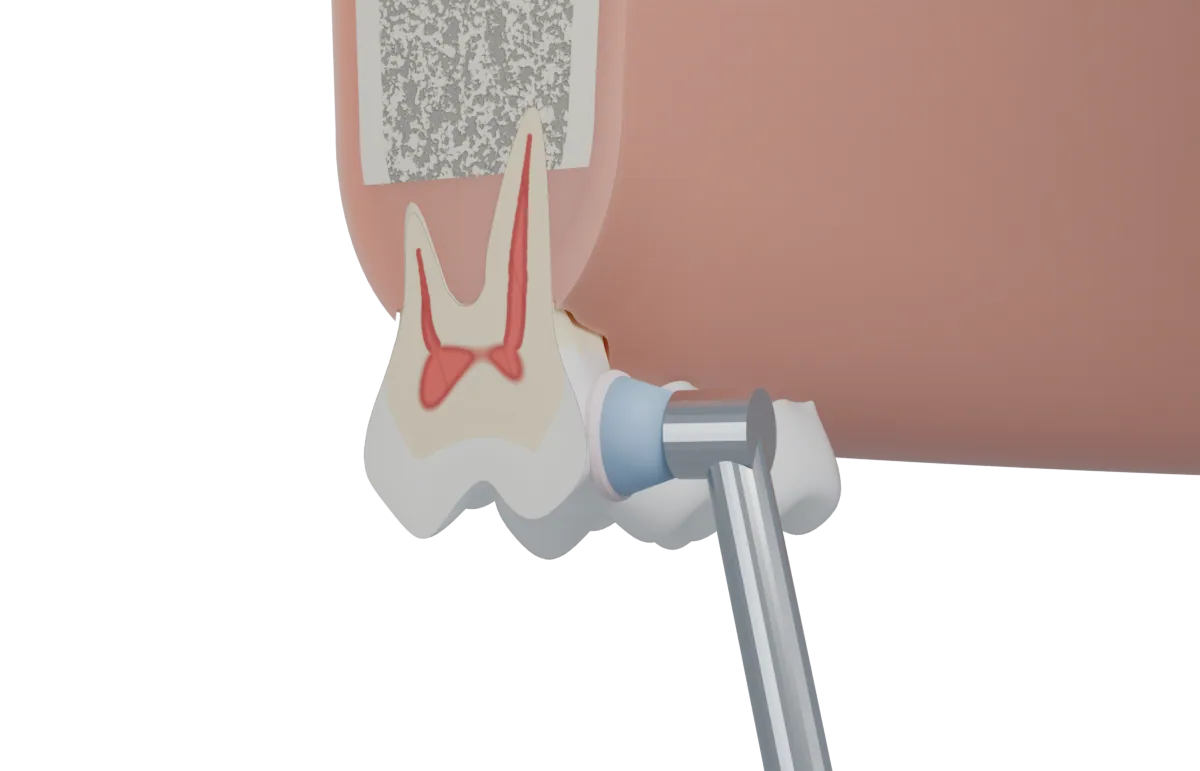
Dental sealants · Visit 1
Cleaning the teeth
The dentist or hygienist thoroughly cleans the teeth first. This helps keep bacteria from getting trapped under the sealant.
Source: clevelandclinic.org
Steps in a typical case
Cleaning the teeth
The dentist or hygienist thoroughly cleans the teeth first. This helps keep bacteria from getting trapped under the sealant.
Visit 1 · Source 1
Drying
The teeth are dried and a piece of cotton gauze is placed nearby to keep the tooth surfaces dry.
Visit 1 · Source 1
Roughening the surface
An acidic gel is placed on the chewing surfaces for a few seconds to roughen them so the sealant bonds well. The gel is then rinsed off and the tooth is dried again.
Visit 1 · Source 2
Painting on the sealant
The liquid sealant is painted onto the enamel of the grooves, where it bonds directly to the tooth.
Visit 1 · Source 1
Hardening
A special light is shone on the sealant to harden it. Placing sealants is painless and takes only a few minutes per tooth.
Visit 1 · Source 1
Afterward
There is no downtime and normal eating and drinking can start right away. Very hard, sticky or chewy foods can chip new sealants, so these are best in moderation.
Visit 1 · Source 1
Typical trade-offs
| Visits | Typically 1 visit. Placing a sealant takes only a few minutes per tooth. Source 1 |
|---|---|
| Time to final result | Typically no downtime. Work or school can continue right away. Source 1 |
| How long it lasts | Typically lasts up to about five years, then may need to be replaced. Source 1 |
| Upkeep | Typical upkeep: routine dental visits at least every six months so the dentist can check the sealants, and replacement when needed. Source 1 |
Figures for a typical case from the sources below. A dentist can say how a given case differs.
Questions to ask your dentist
- The typical case takes one visit. Would mine, and how long would it take?
- What are my other options, including waiting, and what happens if I wait?
- How long does it usually last in a case like mine, and what upkeep will it need?
- Will it hurt, and what can I eat or do while it heals?
- What will it cost me, and will my insurance cover it? Ask which billing codes apply (the typical case uses D1351).
- How many of these have you done, and who would do mine?
Sources
- Dental sealants. Cleveland Clinic. my.clevelandclinic.org/health/treatments/10912-sealants. Accessed November 14, 2026.
- Sealants. ADA MouthHealthy. www.mouthhealthy.org/all-topics-a-z/sealants. Accessed November 14, 2026.
Osler Press procedure library, version 2026.11.0. Billing codes for the typical case: D1351.