Denture reline
A typical case, in 7 steps over 1 visit. Typically about one night without the denture when a lab does a permanent reline. Every step names its source.
Not yet reviewed by a licensed clinician. Every step names its source.
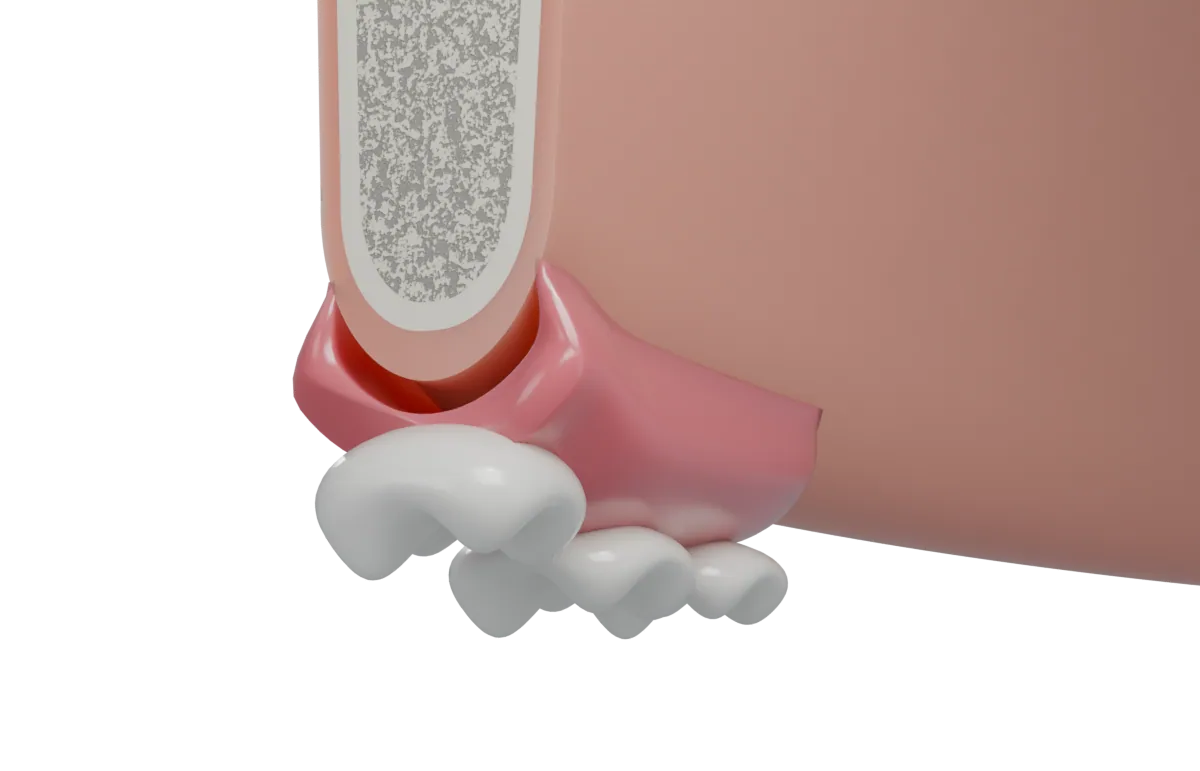
Denture reline · Visit 1
Why a reline
Dentures become loose over time because the mouth naturally changes. The gums and the bone underneath can shrink, so the denture no longer fits well.
Source: cuh.nhs.uk
Steps in a typical case
Why a reline
Dentures become loose over time because the mouth naturally changes. The gums and the bone underneath can shrink, so the denture no longer fits well.
Visit 1 · Source 1
Fit check
The dentist examines the mouth to see whether the denture still fits properly. A denture that stops fitting well, or gets damaged, needs a visit.
Visit 1 · Source 2
Reline, rebase or remake
Because of normal wear, dentures need to be relined, rebased or remade over time. For a reline or rebase, the dentist uses the existing denture. A new one may be needed if it is loose and the teeth are significantly worn.
Visit 1 · Source 1
Adding material
In a reline, the dentist adds material to the denture so it fits more comfortably.
Visit 1 · Source 3
Soft reline while healing
After an immediate denture, a soft temporary reline material is used to refit the denture when it gets loose during healing.
Visit 1 · Source 4
Lab reline
A permanent reline of an immediate denture is done in the lab. The denture usually has to be left overnight.
Visit 1 · Source 4
Afterward
Call the dentist if the denture feels loose, hurts or pinches the gums, or clicks when speaking. Keep up regular dental checkups.
Visit 1 · Source 3
Typical trade-offs
| Visits | Typically the dentist adds material to the denture in one visit, and a permanent lab reline needs the denture left overnight. Source 4 |
|---|---|
| Time to final result | Typically about one night without the denture when a lab does a permanent reline. Source 4 |
| How long it lasts | Typically a reline is needed every 1 to 2 years, or whenever the fit changes. The average denture lasts 7 to 10 years. Source 3 |
| Upkeep | Typical upkeep: removing the denture each day, cleaning it with a denture brush and paste and keeping regular dental checkups. Source 3 |
Figures for a typical case from the sources below. A dentist can say how a given case differs.
Questions to ask your dentist
- The typical case takes one visit. Would mine, and how long would it take?
- What are my other options, including waiting, and what happens if I wait?
- How long does it usually last in a case like mine, and what upkeep will it need?
- Will it hurt, and what can I eat or do while it heals?
- What will it cost me, and will my insurance cover it? Ask which billing codes apply (the typical case uses D5730, D5731, D5750, D5751).
- How many of these have you done, and who would do mine?
Sources
- Denture care: looking after your dentures. Cambridge University Hospitals NHS. www.cuh.nhs.uk/patient-information/denture-care-looking-after-your-dentures. Accessed November 14, 2026.
- Dentures. ADA MouthHealthy. www.mouthhealthy.org/all-topics-a-z/dentures. Accessed November 14, 2026.
- Dentures. Cleveland Clinic. my.clevelandclinic.org/health/treatments/10900-dentures. Accessed November 14, 2026.
- Immediate dentures. University of Iowa College of Dentistry. dentistry.uiowa.edu/patient-care-immediate-dentures. Accessed November 14, 2026.
Osler Press procedure library, version 2026.11.0. Billing codes for the typical case: D5730, D5731, D5750, D5751.