Pulpotomy (baby tooth)
A typical case, in 6 steps over 1 visit. Typically numbness wears off in a few hours, and sedation can take up to 24 hours to wear off. Every step names its source.
Not yet reviewed by a licensed clinician. Every step names its source.
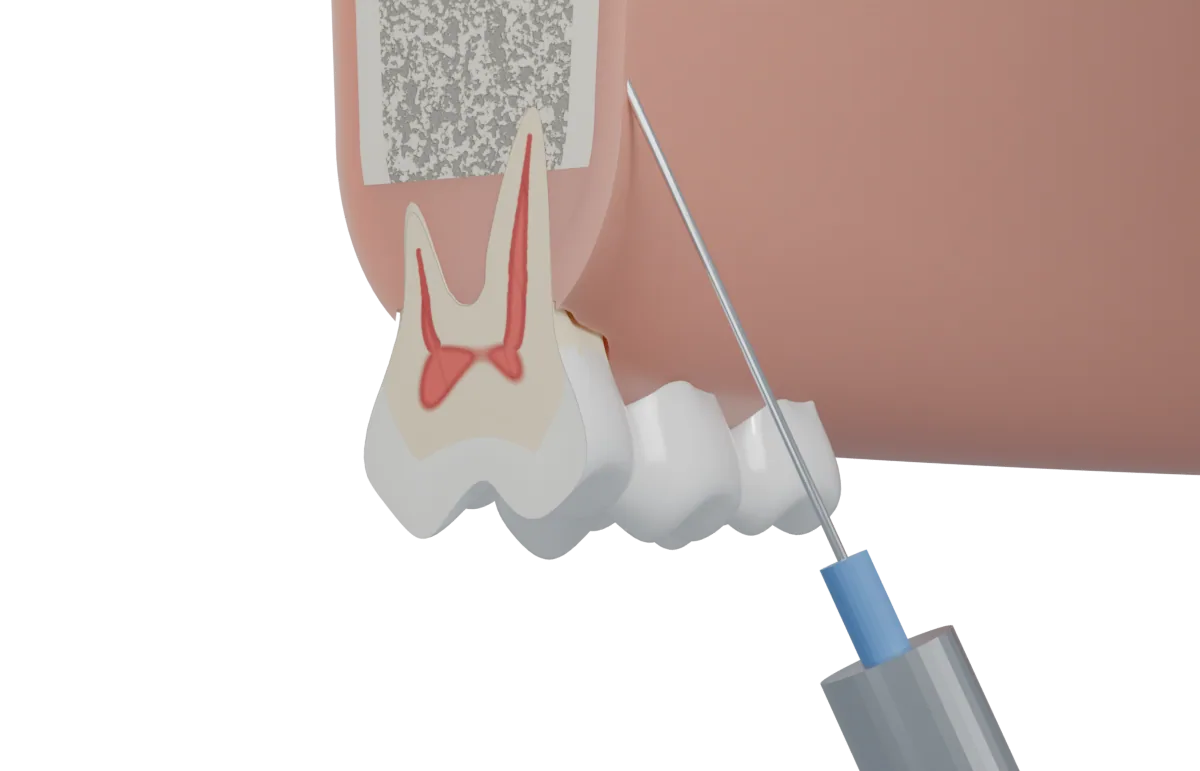
Pulpotomy (baby tooth) · Visit 1
Numbing
A shot near the tooth and the nearby gum numbs the area. The dentist may give a child liquid sedation before the numbing shot.
Source: clevelandclinic.org
Steps in a typical case
Numbing
A shot near the tooth and the nearby gum numbs the area. The dentist may give a child liquid sedation before the numbing shot.
Visit 1 · Source 1
Dental dam
A piece of thin, flexible rubber is placed over the tooth and nearby gums. This dental dam keeps the tooth dry during treatment.
Visit 1 · Source 1
Removing the damaged pulp
A small hole is made in the top of the tooth to reach the pulp inside. The unhealthy pulp in the top part of the tooth is removed, and the root stays in place.
Visit 1 · Source 1
Medicated filling
A medicated filling is placed in the tooth to protect the root and lower the chance of another infection. The top of the tooth is sealed with dental cement.
Visit 1 · Source 1
Crown
The final step is placing a dental crown on the tooth. The dentist may do this right away or wait a few weeks to be sure the pulpotomy took care of the infection.
Visit 1 · Source 1
Afterward
The procedure takes about 30 to 45 minutes. Numbing medicine can take a few hours to wear off, and sedation can take up to 24 hours, so it is best to take it easy for the rest of the day.
Visit 1 · Source 1
Typical trade-offs
| Visits | Typically 1 visit of about 30 to 45 minutes. The crown may be placed that day or a few weeks later. Source 1 |
|---|---|
| Time to final result | Typically numbness wears off in a few hours, and sedation can take up to 24 hours to wear off. Source 1 |
| How long it lasts | Typically the filling or crown lasts until a permanent tooth replaces the baby tooth, which for back teeth is most often at ages 9 to 12. Source 1 |
| Upkeep | Typical upkeep: the dentist is called for severe pain that does not go away with medication, a swollen face or jaw, or fever. Source 1 |
Figures for a typical case from the sources below. A dentist can say how a given case differs.
Questions to ask your dentist
- The typical case takes one visit. Would mine, and how long would it take?
- What are my other options, including waiting, and what happens if I wait?
- How long does it usually last in a case like mine, and what upkeep will it need?
- Will it hurt, and what can I eat or do while it heals?
- What will it cost me, and will my insurance cover it? Ask which billing codes apply (the typical case uses D3220).
- How many of these have you done, and who would do mine?
Sources
- Pulpotomy. Cleveland Clinic. my.clevelandclinic.org/health/treatments/pulpotomy. Accessed November 14, 2026.
Osler Press procedure library, version 2026.11.0. Billing codes for the typical case: D3220.