Removable partial denture
A typical case, in 6 steps over 4 visits. Typically a few weeks to get used to wearing it, with adjustments along the way. Every step names its source.
Not yet reviewed by a licensed clinician. Every step names its source.
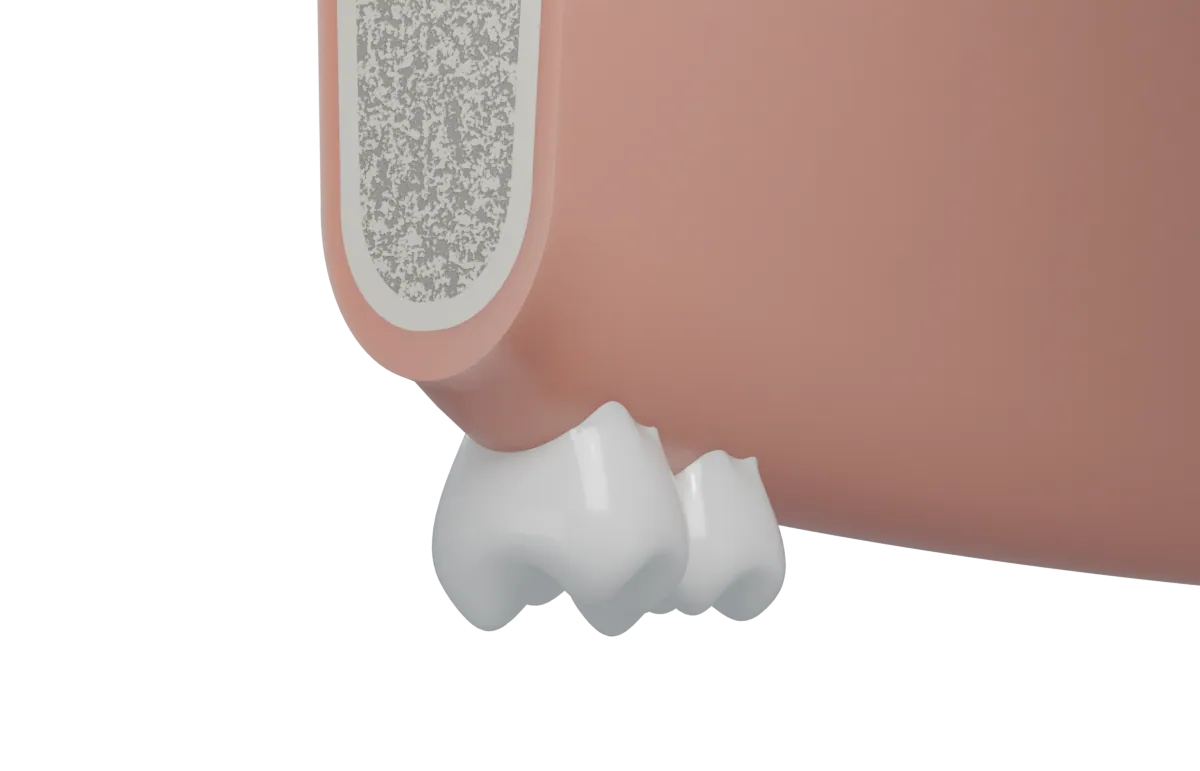
Removable partial denture · Visit 1
Exam and X-rays
The gums and the remaining teeth are examined, and dental X-rays are taken. The teeth next to the gap will hold the partial in place.
Source: clevelandclinic.org
Steps in a typical case
Exam and X-rays
The gums and the remaining teeth are examined, and dental X-rays are taken. The teeth next to the gap will hold the partial in place.
Visit 1 · Source 1
Impressions
Impressions of the teeth and gums are taken. A dental lab uses them to make a model of the mouth and design the partial: replacement teeth on a gum-colored base, held by a metal framework with clasps or by other connectors.
Visit 1 · Source 2
Bite record
A wax bite block records how the upper and lower teeth meet, so the replacement teeth line up with the natural ones.
Visit 2 · Source 1
Building the partial
The lab sets the replacement teeth on the base, checks how they meet the opposite teeth and finishes the partial.
Visit 2 · Source 1
Fitting
The partial is placed and the fit is checked. It should slide into place with relative ease; biting it into position can bend or break the clasps.
Visit 3 · Source 2
Adjustments
A new partial often feels bulky at first. Spots that become sore are adjusted at follow-up visits, and putting it in and taking it out gets easier with practice.
Visit 4 · Source 2
Typical trade-offs
| Visits | Typically several visits to get the fit right. Source 1 |
|---|---|
| Time to final result | Typically a few weeks to get used to wearing it, with adjustments along the way. Source 2 |
| How long it lasts | Typically lasts 7 to 10 years, with a reline every 1 to 2 years. Source 1 |
| Upkeep | Typical upkeep: brushing the partial daily with a denture cleaner, not toothpaste, and keeping it moist overnight. Source 2 |
Figures for a typical case from the sources below. A dentist can say how a given case differs.
Questions to ask your dentist
- The typical case takes 4 visits. How many would I need, and what happens at each one?
- What are my other options, including waiting, and what happens if I wait?
- How long does it usually last in a case like mine, and what upkeep will it need?
- Will it hurt, and what can I eat or do while it heals?
- What will it cost me, and will my insurance cover it? Ask which billing codes apply (the typical case uses D5211, D5212, D5213, D5214).
- How many of these have you done, and who would do mine?
Sources
- Dentures. Cleveland Clinic. my.clevelandclinic.org/health/treatments/10900-dentures. Accessed November 14, 2026.
- Dentures, partial. ADA MouthHealthy. www.mouthhealthy.org/all-topics-a-z/dentures-partial. Accessed November 14, 2026.
Osler Press procedure library, version 2026.11.0. Billing codes for the typical case: D5211, D5212, D5213, D5214.