Gum graft
A typical case, in 7 steps over 3 visits. Typically 1 to 2 weeks to recover, longer when several areas are treated. Every step names its source.
Not yet reviewed by a licensed clinician. Every step names its source.
Gum graft · Visit 1
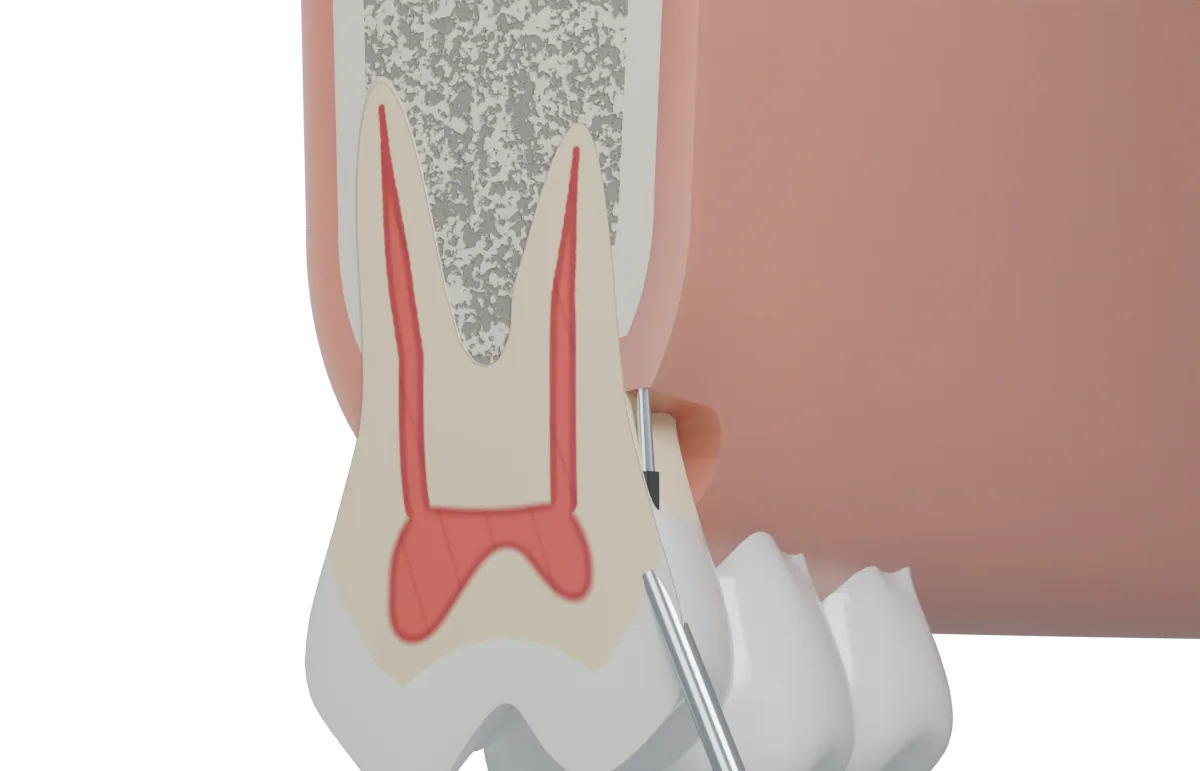
Gum exam
A periodontist (gum specialist) checks the gums and measures the pockets around the teeth. The amount of gum recession around each tooth is checked too.
Source: clevelandclinic.org
Steps in a typical case
Gum exam
A periodontist (gum specialist) checks the gums and measures the pockets around the teeth. The amount of gum recession around each tooth is checked too.
Visit 1 · Source 1
Numbing
Local anesthesia numbs the teeth and gums in the area. Many offices also offer sedation, such as nitrous oxide, pills or IV sedation.
Visit 2 · Source 1
Preparing the site
A small cut makes a flap in the gum. The tooth roots are cleaned.
Visit 2 · Source 1
Taking the graft tissue
A small wedge of tissue is taken from the roof of the mouth, and that spot is closed. When donated tissue from a tissue bank is used instead, this step is skipped.
Visit 2 · Source 1
Placing the graft
The graft is placed over the exposed roots. The gum is moved back and stitched in place. One graft usually takes about an hour.
Visit 2 · Source 1
The first days
Some bleeding, swelling and soreness are normal. Bleeding usually eases in 24 to 48 hours, and swelling lasts three to four days. Soft, cool foods are eaten, and the graft is not brushed or flossed until the surgeon says it is safe.
Visit 2 · Source 1
Follow-up visit
The graft is usually checked about one week later. Recovery usually takes one to two weeks. Follow-ups continue until care goes back to the general dentist.
Visit 3 · Source 1
Typical trade-offs
| Visits | Typically 1 surgery visit plus a check about 1 week later. Source 1 |
|---|---|
| Time to final result | Typically 1 to 2 weeks to recover, longer when several areas are treated. Source 1 |
| How long it lasts | Typically root coverage was still better than before surgery at 10 years in one 20-year follow-up study, with some coverage lost by 20 years. Source 2 |
| Upkeep | Typical upkeep: no brushing on the graft until the surgeon says it is safe, then normal brushing, flossing and routine cleanings. Source 1 |
Figures for a typical case from the sources below. A dentist can say how a given case differs.
Questions to ask your dentist
- The typical case takes 3 visits. How many would I need, and what happens at each one?
- What are my other options, including waiting, and what happens if I wait?
- How long does it usually last in a case like mine, and what upkeep will it need?
- Will it hurt, and what can I eat or do while it heals?
- What will it cost me, and will my insurance cover it? Ask which billing codes apply (the typical case uses D4273, D4275).
- How many of these have you done, and who would do mine?
Sources
- Gum graft surgery. Cleveland Clinic. my.clevelandclinic.org/health/treatments/23504-gum-graft-surgery. Accessed November 10, 2026.
- Twenty-year results after connective tissue grafts and guided tissue regeneration for root coverage (J Periodontol 2020). PubMed (peer-reviewed). pubmed.ncbi.nlm.nih.gov/31453640. Accessed November 10, 2026.
Osler Press procedure library, version 2026.11.1. Billing codes for the typical case: D4273, D4275.