Flexible partial denture (nylon or resin base)
A typical case, in 7 steps over 3 visits. Typically weeks, or sometimes months, to get used to a new denture, with several adjustments in the first couple of weeks. Every step names its source.
Not yet reviewed by a licensed clinician. Every step names its source.
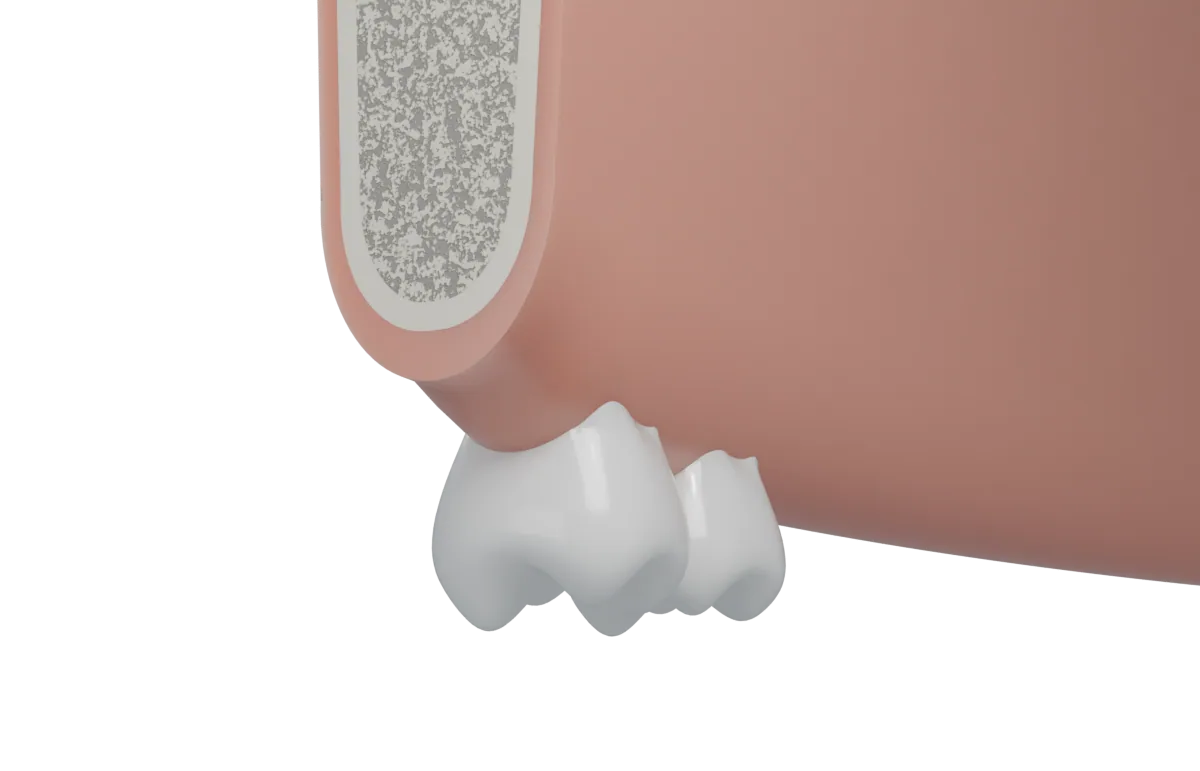
Flexible partial denture (nylon or resin base) · Visit 1
Planning
The dentist designs the partial denture for the person's needs. It may have a metal framework and clasps that connect to the teeth, or other connectors that look more natural.
Source: mouthhealthy.org
Steps in a typical case
Planning
The dentist designs the partial denture for the person's needs. It may have a metal framework and clasps that connect to the teeth, or other connectors that look more natural.
Visit 1 · Source 1
Impressions
The dentist takes impressions of the upper and lower jaws, including the gums and any remaining teeth. Often a preliminary and a final impression are needed.
Visit 1 · Source 2
Crowns if needed
Crowns on natural teeth are sometimes needed to improve the fit of a partial denture.
Visit 1 · Source 1
Made in the lab
A technician makes a stone model from the impressions and builds the denture on it. The base is made from materials like acrylic, nylon or resin, and the artificial teeth are added. The denture is then polished and sent back to the dentist.
Visit 1 · Source 2
Fitting
The dentist places the denture, checks the fit and looks for spots that press too hard on the gums. It usually takes several office visits to get the fit right.
Visit 2 · Source 2
Getting used to it
A new partial denture may feel awkward or bulky at first. Putting it in and taking it out takes practice. Never force it into place by biting down, because that could bend or break the clasps.
Visit 2 · Source 1
Adjustments and care
If a spot gets sore, the dentist adjusts the denture. Start with soft foods cut into small pieces and chew on both sides. Clean the denture gently every day, and do not try to repair it at home.
Visit 3 · Source 1
Typical trade-offs
| Visits | Typically several office visits to get the fit right. Source 2 |
|---|---|
| Time to final result | Typically weeks, or sometimes months, to get used to a new denture, with several adjustments in the first couple of weeks. Source 2 |
| How long it lasts | Typically the average denture lasts 7 to 10 years, with a reline every 1 to 2 years or whenever the fit changes. Source 2 |
| Upkeep | Typical upkeep: removing it at the end of each day, cleaning it with a denture brush and paste, and keeping regular dental checkups. Source 2 |
Figures for a typical case from the sources below. A dentist can say how a given case differs.
Questions to ask your dentist
- The typical case takes 3 visits. How many would I need, and what happens at each one?
- What are my other options, including waiting, and what happens if I wait?
- How long does it usually last in a case like mine, and what upkeep will it need?
- Will it hurt, and what can I eat or do while it heals?
- What will it cost me, and will my insurance cover it? Ask which billing codes apply (the typical case uses D5225, D5226).
- How many of these have you done, and who would do mine?
Sources
- Dentures, partial. ADA MouthHealthy. www.mouthhealthy.org/all-topics-a-z/dentures-partial. Accessed November 14, 2026.
- Dentures. Cleveland Clinic. my.clevelandclinic.org/health/treatments/10900-dentures. Accessed November 14, 2026.
Osler Press procedure library, version 2026.11.0. Billing codes for the typical case: D5225, D5226.