Early orthodontic treatment (child)
A typical case, in 6 steps over 3 visits. Typically the early phase lasts about nine to 12 months. Every step names its source.
Not yet reviewed by a licensed clinician. Every step names its source.
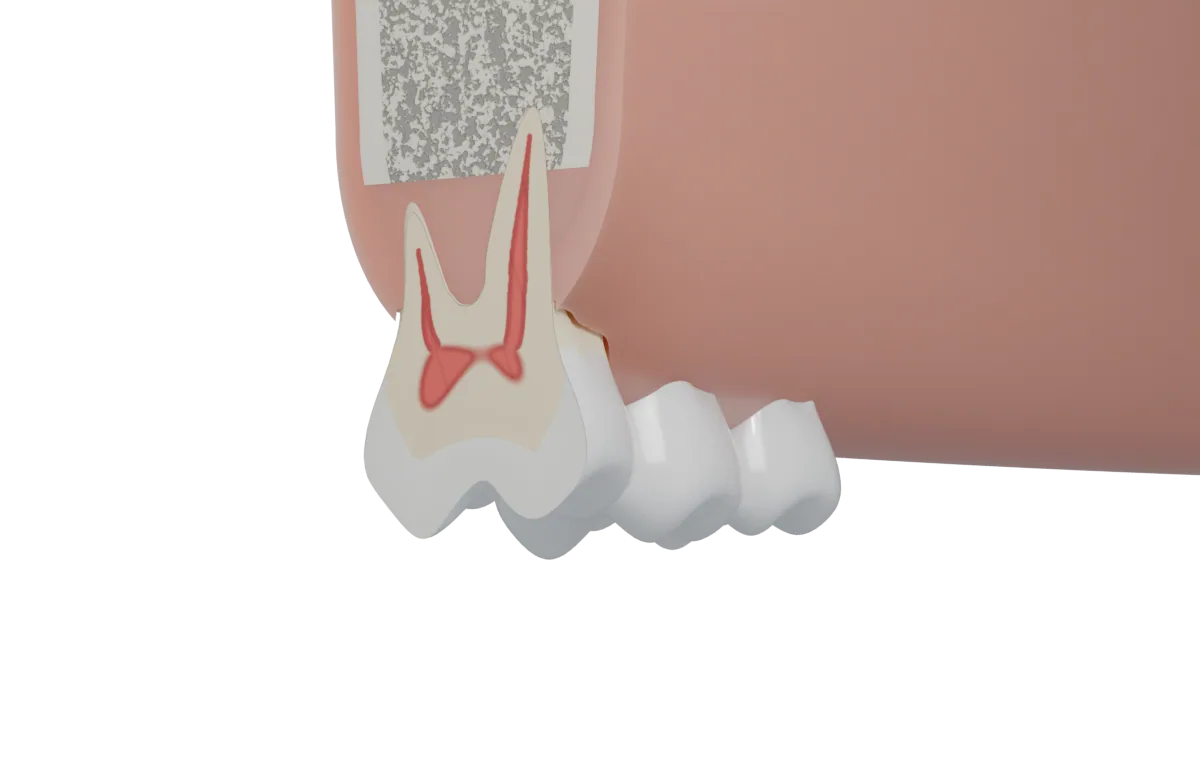
Early orthodontic treatment (child) · Visit 1
First check-up
The first orthodontic check-up is recommended when a problem is first noticed, and no later than age 7. By then many children have enough permanent teeth for the orthodontist to see how the teeth and jaws are developing.
Source: aaoinfo.org
Steps in a typical case
First check-up
The first orthodontic check-up is recommended when a problem is first noticed, and no later than age 7. By then many children have enough permanent teeth for the orthodontist to see how the teeth and jaws are developing.
Visit 1 · Source 1
What the check-up finds
There are three usual outcomes: no treatment is needed, treatment may be needed later so the child is watched as the face and jaws grow, or there is a developing problem that suits early treatment.
Visit 1 · Source 1
Making a plan
If early treatment helps, the plan aims to guide jaw growth and make room for incoming permanent teeth. It is tailored to the child.
Visit 1 · Source 1
Wearing an appliance
The orthodontist may prescribe a fixed or removable device to move teeth, change jaw position or hold teeth in place. Sometimes the only step is removing certain baby teeth at the right time.
Visit 2 · Source 1
The early phase
Phase 1 treatment typically happens between ages 6 and 9, while baby teeth are being lost, and typically lasts nine to 12 months.
Visit 2 · Source 2
Watching growth
Some children need a second course of treatment once all permanent teeth have come in, to place those teeth in their best positions.
Visit 3 · Source 1
Typical trade-offs
| Visits | Typically 1 check-up visit first, then regular visits only if the child needs to be watched or treated. Source 1 |
|---|---|
| Time to final result | Typically the early phase lasts about nine to 12 months. Source 2 |
| How long it lasts | Typically some children need a second course of treatment later, once all permanent teeth have come in. Source 1 |
| Upkeep | Typical upkeep: regular visits while the child grows, so the orthodontist can watch the teeth and jaws. Source 1 |
Figures for a typical case from the sources below. A dentist can say how a given case differs.
Questions to ask your dentist
- The typical case takes 3 visits. How many would I need, and what happens at each one?
- What are my other options, including waiting, and what happens if I wait?
- How long does it usually last in a case like mine, and what upkeep will it need?
- Will it hurt, and what can I eat or do while it heals?
- What will it cost me, and will my insurance cover it? Ask which billing codes apply (the typical case uses D8010, D8020, D8030, D8040).
- How many of these have you done, and who would do mine?
Sources
- Is there a benefit to early treatment?. American Association of Orthodontists. aaoinfo.org/whats-trending/is-there-a-benefit-to-early-treatment. Accessed November 14, 2026.
- Phase 1 orthodontics. Children's Hospital of Philadelphia. www.chop.edu/treatments/phase-1-orthodontics. Accessed November 14, 2026.
Osler Press procedure library, version 2026.11.0. Billing codes for the typical case: D8010, D8020, D8030, D8040.