Core buildup or post and core
A typical case, in 7 steps over 2 visits. Typically it takes two to three weeks, sometimes longer, for the dental lab to make the crown, and you wear a temporary crown in the meantime. Every step names its source.
Not yet reviewed by a licensed clinician. Every step names its source.
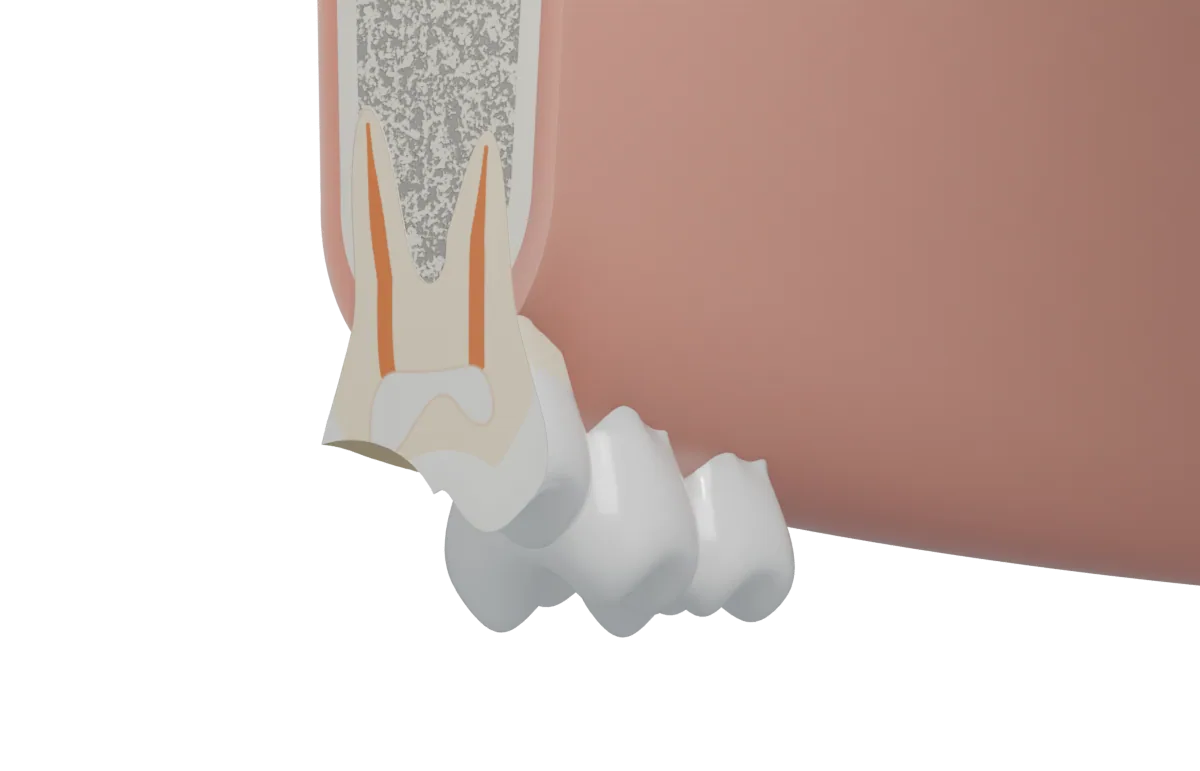
Core buildup or post and core · Visit 1
Why a buildup is needed
Crowns are commonly recommended when a tooth has a lot of tooth tissue missing from decay or a fracture, has a large filling that needs more protection, or has had root canal treatment.
Source: bristol.ac.uk
Steps in a typical case
Why a buildup is needed
Crowns are commonly recommended when a tooth has a lot of tooth tissue missing from decay or a fracture, has a large filling that needs more protection, or has had root canal treatment.
Visit 1 · Source 1
Numbing
The tooth is numbed with local anesthetic to keep you comfortable.
Visit 1 · Source 1
Building up the tooth
Your dentist may use a filling material to build up certain parts of the tooth. The main goal is to create a strong foundation for the new crown.
Visit 1 · Source 2
Adding a post if needed
After a root canal, a metal rod (post) may be placed in the root canal to help hold the core (filling) material, which supports the crown.
Visit 1 · Source 3
Impressions and a temporary crown
Your dentist takes impressions of your teeth, either with a putty-like material or a handheld scanner, and sends them to a dental lab. It usually takes two to three weeks, sometimes longer, to make your crown, so you wear a temporary one in the meantime.
Visit 1 · Source 2
Placing the final crown
At the second visit, your dentist removes the temporary crown, checks the shape, color and fit of the new crown, and bonds it to your tooth with a strong dental cement.
Visit 2 · Source 2
Afterward
Most people can go back to work, school and routine activities right away. Some sensitivity for a couple of weeks is normal, especially to heat and cold, and over-the-counter pain relievers can ease discomfort.
Visit 2 · Source 2
Typical trade-offs
| Visits | Typically crown treatment takes two appointments of up to 3 hours each, one for tooth preparation and one to cement the crown. Source 1 |
|---|---|
| Time to final result | Typically it takes two to three weeks, sometimes longer, for the dental lab to make the crown, and you wear a temporary crown in the meantime. Source 2 |
| How long it lasts | Typically a dental crown lasts between five and 15 years with proper care. Source 2 |
| Upkeep | Typical upkeep: brushing at least twice a day with fluoride toothpaste, flossing daily and avoiding extremely hard, crunchy or chewy foods. Source 2 |
Figures for a typical case from the sources below. A dentist can say how a given case differs.
Questions to ask your dentist
- The typical case takes 2 visits. How many would I need, and what happens at each one?
- What are my other options, including waiting, and what happens if I wait?
- How long does it usually last in a case like mine, and what upkeep will it need?
- Will it hurt, and what can I eat or do while it heals?
- What will it cost me, and will my insurance cover it? Ask which billing codes apply (the typical case uses D2950, D2952, D2954).
- How many of these have you done, and who would do mine?
Sources
- Dental crowns. University of Bristol Dental School. www.bristol.ac.uk/dental/treatment/patient-information/dental-crowns. Accessed November 14, 2026.
- Dental crowns. Cleveland Clinic. my.clevelandclinic.org/health/treatments/10923-dental-crowns. Accessed November 6, 2026.
- The Chairside Instructor: root canal (endodontic) therapy. American Dental Association. ebooks.ada.org/154clpm/31. Accessed November 14, 2026.
Osler Press procedure library, version 2026.11.0. Billing codes for the typical case: D2950, D2952, D2954.